
Reclaiming Your Power
Originally published February 4, 2026
By Harpreet Ahuja, Leadership Committee Member
Just a note: The framework I explore comes from the Conscious Use of Power course at Inner Activist, which draws inspiration and guidance from Leticia Nieto’s work.
Navigating the Upside Down
The world has gone awry. I open my news app and misery is the only thing on the menu. In fact, I am reminded of the Upside Down in Stranger Things, a Netflix series, where everything is recognizable but fundamentally wrong. We watch an ongoing genocide, the kidnapping and terrorizing of civilians, nonsensical shootings by law enforcement, and the neo-colonial takeover of sovereign states—all unfolding in real-time. I feel dread, despair, and sadness, so I begin to wonder: How is there still room to debate the “validity” of such obvious cruelty?
A Broken Compass
This sense of inversion is rooted in a fundamental disconnect. As Josh Johnson, an American stand-up comedian and writer, recently articulated about the legal justification for the shooting of Renee Good by an ICE agent, we are at a time when Western law no longer aligns with our collective morality. Barely seventeen days later, Alex Pretti, an ICU nurse, was defending a woman when two ICE agents fired ten shots, killing him—another act that tested the limits of legal justification. The legal system we once relied on to define right and wrong has drifted away from the public interest. Johnson’s assessment is spot on: if we rely on our domestic and international legal systems as they stand to guide us, we will find ourselves in a circle of corruption.
The resulting erosion is accelerated by political figures like President Trump, who openly defies the system to bend it to his will—undermining the judiciary’s independence by attacking judges and court rulings that contradict his agenda. Beyond the domestic realm, we are also witnessing those in positions of power around the world codifying their complicity in genocide. A stark example is the invitation by President Trump and subsequent acceptance by thirty-five nation-states to join the “Board of Peace” to rebuild Gaza. This proposal for “reconstruction” comes even as a genocide and ecocide of the Palestinian people and their territory continues with the full backing of the United States, illustrating a profound misalignment between “legal peace” and moral reality on the ground.
As our world tilts into the Upside Down, people around the globe are resisting, even knowingly putting themselves in death’s way. On a massive scale, the world rises from Minneapolis to Iran—and we are forced to decide: Which side are you on?
Power and Context
While this question appears simple, many people feel overwhelmed when grappling with the responsibility of taking a stand. This sense of helplessness often manifests in three distinct ways:
Indifference: “I cannot have an opinion because I need to educate myself on the topic,” yet this person never seeks out the information.
Distance: “This issue doesn’t affect me and I’m not sure what to do, so I’m just going to stay out of the conversation entirely.”
Neutrality or Silence: “I see valid points on both sides, so I am choosing not to support either party.” This choice often masks a refusal to engage with power dynamics. It is complemented by linguistic silence, the use of the passive voice, where one says “Mistakes were made” or “Palestinians died” instead of “The Israel Defense Forces killed Palestinians.” By removing the subject, the speaker remains silent on who is responsible.
Not taking a position only perpetuates inequality and upholds the status quo. As anti-apartheid activist Desmond Tutu cautioned, this mindset is dangerous: “If you are neutral in situations of injustice, you have chosen the side of the oppressor.”
Navigating this choice, however, can be difficult because power and oppression are inherently complex. Though our brains prefer to categorize and impose binaries of “this or that” and “us or them,” this reductionism does not account for the context in which we operate.
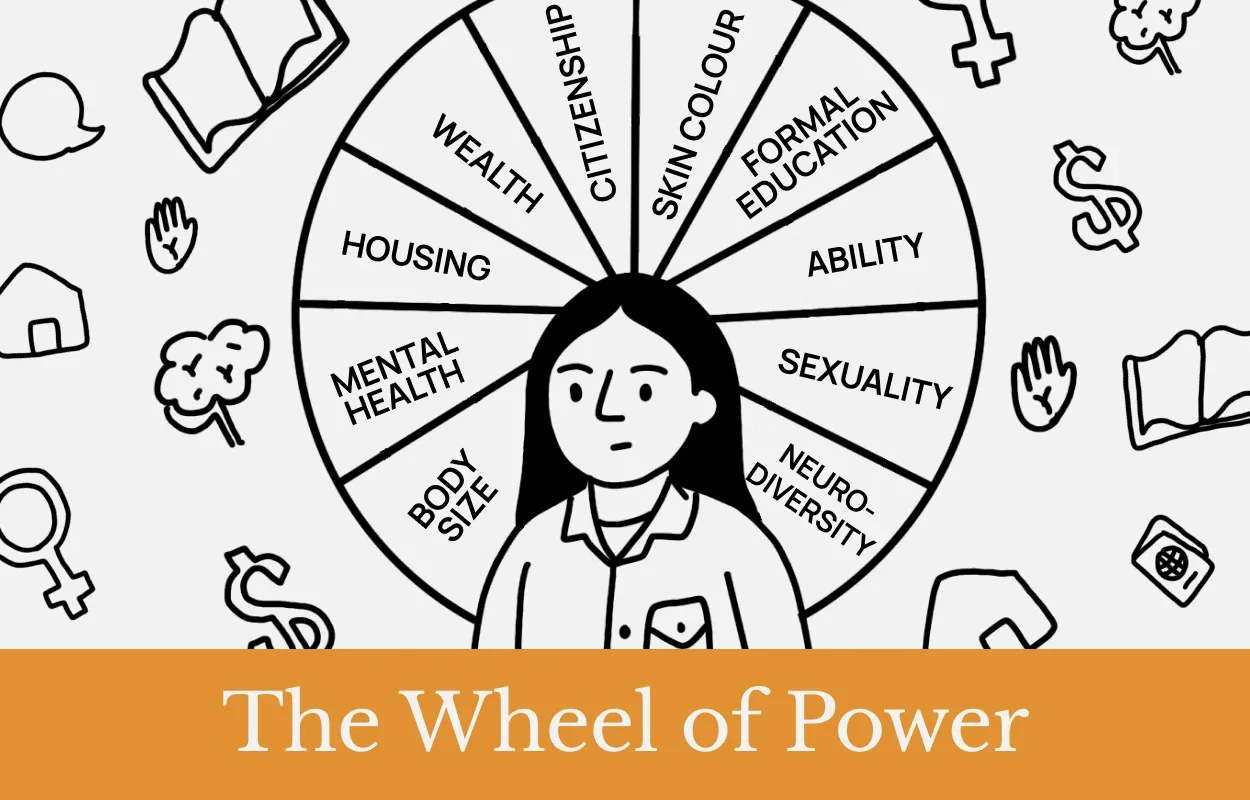
A more thorough analysis asks: In my current space, in what ways do I hold power, and in what ways do I lack it?
By recognizing that our power is context-dependent, we can enter situations knowing when to step up, when to step back, and when someone else should step in alongside us. Stepping back isn’t an act of indifference, distance, or neutrality when it is a strategic move meant to clear the path for someone else’s power.
Strategizing Your Stance
Similar to ocean currents, power and oppression are multi-directional. We gain momentum when we navigate these currents strategically, but if we ignore them, we risk getting battered by the waves. These currents are complex; they can propel us forward in one space while pulling us backward in another, often at the exact same time. For instance, an asylum-seeker awaiting a status determination would be vulnerable at a protest with police presence; yet, that same individual might hold significant power as a panelist on an academic committee discussing the ethics of citizenship. While the individual as an asylum-seeker lacks formal power (legal status), they possess moral and epistemic power (the power of knowing the truth of a system) that the academic committee lacks.
By asking, Where do I hold power in this specific space? taking a stand becomes a clear, navigable act. From moment to moment, this inquiry allows us to use our full range of skills.
When we recognize the power we hold, we become more aware of unfair power dynamics. By understanding rank systems (who holds power and privilege) and building personal relationships with targeted groups, we can leverage our standing to dismantle barriers. Ultimately, this allows us to center the voices of those most affected by structural violence and inequity.
Owning Your Power
When I was a young girl, I did not have much power. Growing up in Québec during the separatist movement, amidst anti-immigrant and anti-anglophone sentiment, I remember being targeted by my teachers because of the identities that I held. By my late twenties, however, my context had shifted: I became a lawyer. Had I not internally updated my self-perception to acknowledge this new privilege, I would have remained trapped in the mindset of that powerless girl, unable to recognize the agency I now possess to effect change.
My social and professional positions were no longer the same, but I still experienced an “identity lag.” It wasn’t an easy, immediate transition. Although my circumstances had improved, my mind was on rewind, holding me back from processing the present and the possibilities of the future. I was still scared, living in deep survival mode, unable to fully digest that my self-perception was lagging behind my reality. Closing the gap meant I had to do some heavy lifting and face my deepest fears. Slowly, with each new day, I began to replace the heaviness of my past with the lightness of my existing circumstances. With the open space I now hold, I have room to decide strategically how I can direct my power to create openings for other people.
Re-Aligning Your Compass
Today, look at the spaces you inhabit—your workplace, your community, your kitchen table—and use these five questions to uncover the power you already hold:
When I look at the Upside Down of my political landscape, which response do I usually default to: indifference, distance, or neutrality?
Where am I still acting like the person I used to be, and what could happen if I started acting like the person I am now?
In the specific spaces I will enter this week (e.g., a meeting, a family dinner, a community event), where do I hold power or privilege (high rank), and in what ways do I experience marginalization or disadvantage (low rank)?
When using my high rank, am I speaking for others, or am I using my power to work alongside and clear the path for them?
What is one small, strategic move I can make tomorrow to bring my actions into alignment with my morality, rather than conforming to the ‘broken compass’ of the system?
Answering these questions honestly requires the courage to dissect ourselves, without judgment. By updating our self-perception and recognizing where we have power, we can reset our compass, step forward into action, and hold our political leaders accountable. We cannot control the systemic currents around us, but we can always control where we position ourselves.
Meet Harpreet: Harpreet Ahuja is a lawyer, human rights consultant, and social justice advocate driven by the conviction that systems need reimagining. Her work explores the intersection of law, policy, and lived experience—and tells the human stories behind injustice. Harpreet is based in Vancouver on the traditional, ancestral and unceded territories of the xʷməθkʷəy̓əm (Musqueam), Sḵwx̱wú7mesh (Squamish), and səlilwətaɬ (Tsleil-Waututh) Nations, and publishes on her website.
When Trees Talk, or As We Witness Genocide
Originally published May 5, 2025
Dear Community,
It has been a while.
This letter emerges, in part, as we continue to be shaken by the genocide in Gaza, but its concerns are situated in the long duree of colonial dispossession that spans from Turtle Island to Palestine, and connects us through a common ancestry in movement. We write, too, in the shadow of the recent tragedy at the Lapu-Lapu Day Festival in Vancouver, BC (where most of the IA members reside), where eleven lives were taken in a devastating act of violence. We grieve for those taken and harmed, while also holding space to understand the conditions and pain that led to this tragedy occurring.
We are reemerging from an extended hiatus during which we embarked on a journey of reflection and renewal, and we would like to share some of what we learned with you.
The following statement reflects on over a year of internal conversations, mostly held on the shores of the Ch’ekxwa’7lech, the “sometimes dry land,” with an aim to emulate the wisdom of these shores, when it does get dry at times, and the caretakers who named it, by looking to the example of the mycorrhizal networks that stretch below the surface sharing water, nutrients and resources.
We invite individuals and organizations committed to social change to join us to go deeper—let us examine the systemic patterns that persist not just in the world around us, but within our own practices, paying attention to the epistemic and operational norms that condition our work. Too often, these patterns maintain the status quo, diverting our attention and resources away from the urgent calls coming from struggles in the Global South. This letter emerges in part in the wake of the ongoing genocide in Gaza, but its lessons draw on a longer legacy of colonial dispossession—from Turtle Island to Palestine—and its resistance that binds us through shared legacies of resistance and movement.
Context of Crisis
Over the past three to four years, the Inner Activist (IA) faced a significant internal crisis that brought to the fore concerns about structural asymmetries in power in the workplace, and counterproductive conflict resolution processes. The events emerged within the context of the organization’s innovative, and unprecedented, restructuring, which broadened the scope of how diversity was imagined and enacted (resulting in a prolific team of trainers delivering programming) as well as deep programmatic engagement with alternative paradigms for inner and personal work, conflict resolution, repair and education with our tools and frameworks.
The crisis began with a formal complaint made against IA leadership, but became exacerbated through a series of alienating processes that were tethered to HR and institutional protocols and revealed the fundamental lack of a system of conflict resolution in place that reflected the breadth of vision, life experience and expertise of IA membership. This lack exacerbated existing tensions, leading to a near complete breakdown in internal relationships. Members felt isolated and silenced and began to demand accountability based on models that centered care and transformative justice, rather than the ‘jury-like’ driven and punitive structure of HR-led approaches.
Because of the sensitive nature of this complaint, there was a thorough—but confidential—HR investigation. The need for confidentiality during this process conflicted some members’ calls for transparency and contributed to an environment of mistrust and speculation. Existing tensions worsened, further intensified by the isolation of the pandemic lockdown. Many members, feeling increasingly alienated, began calling for a different approach. They demanded accountability models rooted in care and transformative justice. In this spirit, IA engaged an external facilitator to begin a new process of accountability and repair, and in this, recognized the need for a more nuanced approach to conflict resolution that goes beyond the legal frameworks used in conventional HR.
By late 2021, the remaining (some left) IA members began conducting exit interviews with former members in order to gather insights that would help foster the process of healing. Engaging with an experienced external facilitator was important, as it led to the consolidation of a report that helped us to begin to find a way to re-engage and laid important groundwork for repair.
The IA’s struggles are not isolated; they emerged within the historical context of struggles such as Black Lives Matter, which informed the conversations and agitations of members within the organization. This letter underscores the importance of aligning personal growth with a broader commitment to justice. We want to recognize that individual, workplace, and collective actions intersect and must form a dialogue with larger systemic fields.
Path Forward: Repair and Learning
We share this statement as a reaffirmation of our vision and mission. Despite the genuine, sustained efforts of many people committed to love and justice, the organization faltered. We fell apart. And we did so, in part, because we—like all of us—are entangled in systems of oppression. In our efforts to resist, we replicated familiar patterns: opacity, control, reactive decision-making, cancel culture, and more.
Confronting these patterns has been painful but necessary. It has also given us hope: we believe it’s possible to build something more resilient—something that can hold difficult truths while staying connected. We know that whatever truths we refuse to face will become embedded in our culture, our relationships, our policies, and our programs. Our hope is that the next time we fall apart—and we will—we’ll do so having made only new mistakes.
Looking ahead, we recommit to equity, mutual accountability, and a multidimensional approach to healing—one that centers both individual and collective care.
Conclusion
We invite you to engage with us. We will be offering modified versions of our programs, and please reach out to those you feel closest to at the IA. You can also reach out to the project director (PD) who is committed to listening, learning, and growing through our work ahead. We acknowledge the complexity of the journey ahead and express gratitude for the contributions of those who have been part of the IA. This document serves not as a conclusion but as a step towards a more aware and responsive organization dedicated to social change.
Black Lives Matter. Meet this Moment.
Originally published Jun 11, 2020
Dear Inner Activist Community,
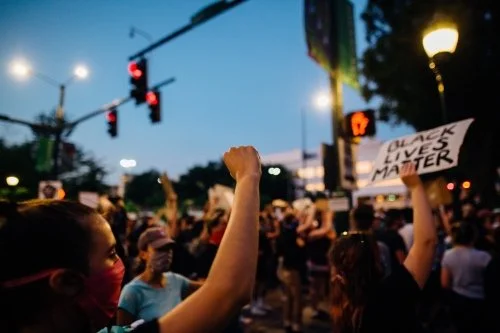
We are witnessing necessary and transformational change that has been catalyzed by the murder of Ahmaud Arbery, Breonna Taylor, George Floyd, Nina Pop, and Tony McDade and countless other Black, queer, and trans people in the United States. We have also been witness to the recent murders at the hands of police of Chantel Moore, a Nuu-chah-nulth woman, as well as Regis Korchinski-Paquet, an Indigenous-black woman in Toronto, Ontario.
We are heartbroken with grief and we are livid with anger. We are tired but the work must get done. We are at a loss for words and this is not the time to be silent.
The Inner Activist holds up and honours the activists, organizers, and leaders of the Black Lives Matter movement who are making countless sacrifices and risking everything in their call for an end to police brutality, white supremacy, and anti-Black racism. We stand in solidarity with their demands to defund and dismantle the police state in every community. We echo their call for justice for each murder that has robbed Black families and communities of their leaders, their healers and their loved ones for 400 years on Turtle Island.
In our “Canadian” context, we also recognize and condemn the erasure of black communities, their history and resistance as well as the violence they have endured at the hands of the settler-colonial state. We cannot do this issue justice without simultaneously acknowledging and condemning the ongoing genocidal violence endured by Indigenous people on Turtle Island. We will work in solidarity with Black and Indigenous communities in dismantling white supremacy and undoing the global colonial project that is at the heart of the oppression endured by Black and Indigenous people.
We are asking ourselves, how will The Inner Activist show up for this work? We begin by renewing our ongoing commitment to supporting and centering Black, Indigenous, and people of colour in the pursuit of justice and call for freedom. We will continue to offer spaces for capacity building, healing, and transformative leadership for the long haul. We will amplify the knowledge and teachings of Black and Indigenous people who have always provided the foundation of our liberation movements around the world.
To our Black leaders and community, we see you and we stand with you. We invite you to call on The Inner Activist. We are committed to showing up. Reach out to either of us at tahia@inneractivist.com or jorge@inneractivist.com for access to the support and resources that are available to us.
To our non-Black racialized community we ask you to join in this Movement for Black Lives. You are likely reflecting on your community's struggles and pain at this time too. Do not let this moment pass without diving into the deep inner work that is required to understand that we cannot know freedom until Black people know freedom. Connect with the liberation practices rooted in your culture, your faith and ancestral traditions, have the difficult conversation with your family, listen with all the senses available to you, exercise humility in your learning, tend to your nervous system, build authentic relationships of reciprocity. Do not let this moment pass without making real and concrete contributions to the movement.
To our white allies, we also ask you to join The Inner Activist in meeting this moment. There is a clear call for you to step up against anti-Black racism. Are you going to do the work? Lean into what you are feeling, seeing, experiencing. Don’t think, debate, rationalize, explain this one away because that costs Black people their lives. Take action! Consider the ways that Black people continue to dignify you by teaching you all that you know about racism. Put your learning into action, abandon your comfort, fund the movement, use your privilege to protect Black bodies on the front lines, compensate and pay for Black expertise and labour, make demands of the political institutions that exist to protect and serve you at the cost of black and brown communities.
If you are a leader of an organization, this is not business as usual. Show up by stepping aside and give Black leaders access to your resources and infrastructure - no questions, no applications, no hoops to jump through. Begin the steps to center and hand over power to Black, Indigenous and people of colour on every level of your organization. Do not be the "white moderate" that Dr. King warned against.
To our entire Inner Activist community, we see your rage, your power, your fatigue, your pain. We are with you now and we are in this for a lifetime.
In solidarity,
Tahia, Jorge & The Inner Activist Team
Perspectives on COVID19 from Disability Justice Activists
Originally published May 25, 2020
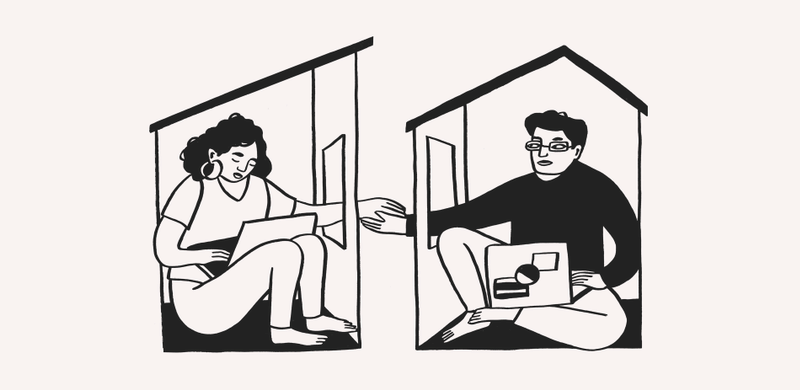
Many people, progressive organizations, businesses, and governments have stepped in and stepped up to provide support in these unsettling times. One of The Inner Activist’s areas of learning these days is disability justice. We are having more conversations and reflections on this with the intention to start taking action and making changes at The Inner Activist. As a result, we became particularly interested in the culture of accommodation and access that emerged in several communities through mutual aid networks, working from home, taking events online, and creative engagement opportunities despite social distancing. We noticed that disability justice activists and disabled people are pointing out that the new normal of access and accommodation is using a lot of practices and ideas that have been created by the disability justice community and has largely been ignored or gone without credit.
We reached out to Heather McCain from Creating Accessible Neighbourhoods and Vivian Ly from Autistics United Canada, both live in Metro Vancouver on unceded Coast Salish territory. Both Heather and Vivian spoke to the history of disability justice and its roots in QTBIPOC (Queer, Trans, Black, Indigenous, and people of colour) communities emphasizing how these communities rely on each other in the face of systems that actively marginalize and harm them. Vivian highlights, “Disabled communities have made collective access & mutual aid an explicit and intentional practice. We talk of collective survival; we dream of collective liberation. No one left behind. That is the foundation of disability justice.”
Heather explains how people with disabilities are treated as a “special interest group” despite being the largest minority in Canada, composing a quarter of the population. This narrative frames the hard-won support and access experienced by people with disabilities as an accommodation rather than a human right. This pandemic has demonstrated how quickly governments are able to mobilize resources to help abled people maintain their lifestyles. This is in stark contrast to the activism and organizing that has always been required of disabled people to gain access to the support that they need. Heather argues that this contrast is deeply rooted in capitalism. Abled people are being supported to continue their work, access emergency funding, and maintain their businesses, in order to sustain their engagement with a capitalist system in spite of the pandemic. People with disabilities are not seen as productive players in the story of capitalism and therefore their economic and financial needs don’t get prioritized. “It's super frustrating to see change only come when barriers are created for abled people. The reality of disabled people's everyday lives is that we were already struggling. For example, there was a $300 bump (In British Columbia) to disability benefit rates, but it's still not even 75% of the poverty line. The measures taken for the pandemic still wouldn't have been enough to care for and support the survival of the most vulnerable in pre-pandemic conditions. That is how big the inequality of care is. I think recognition of that would go a long way.” says Vivian.
When asked about the post-pandemic world, Vivian urges us to connect our feelings of struggles with social isolation and confinement with the unjust and forced confinement of incarcerated people, homebound disabled people, and disabled people in institutions. Heather explains the importance of maintaining the culture of access and inclusion that has emerged within community spaces. “People with disabilities will remember the accommodations that were made possible for abled people during the pandemic and we will not let them forget.”
~~~~
As an initial step, we invite you to join us in learning and reflecting on these 10 Principles of Disability Justice.
About Vivian Ly and Heather McCain
Vivian Ly is a co-founder of Autistics United Canada, the first national self-advocacy organization by and for Autistic people. With the Vancouver-Coast Salish Territory chapter, Vivian is part of an Autistic collective that facilitates outreach workshops, hosts community events, maintains a mobile neurodiversity library, and engages in policy advocacy at the local, provincial, and national level. While studying and conducting research in Behavioural Neuroscience at Simon Fraser University, Vivian creates campus-wide change with SFU Autistics United and the Disability and Neurodiversity Alliance. Vivian believes in a world where no one is left behind, where radical resilience and survival is nurtured and celebrated, where collective access is the norm, and where disabled, sick, Mad, Deaf, and neurodivergent people are free.
Heather McCain is Executive Director of Creating Accessible Neighbourhoods, a non-profit they founded in 2005, and a Crip Doula, a Disability Justice term for someone who helps disabled people with intersecting identities navigate our complex systems, build community, provide and share resources and support. Heather’s own experiences with multiple types of disabilities, inaccessibility, and ableism led them to become a well-known and respected advocate, speaker, educator, and activist. Heather is committed to centering decolonialization, using an intersectional lens, and engaging in cross-movement organizing. Heather strives to challenge ways of thinking and fundamentally shift the way we organize and fight for social change.
Men's Work and Accountability
The Inner Activist uses affinity groups (also known as caucusing) in our programs because we believe when people who share target identities gather together to discuss their experiences and engage in dialogue, we can begin a journey towards resistance and resilience. As a woman of colour, hearing another woman of colour describing their experience in a white dominant workplace is validating. Hearing the shared experiences of dozens or hundreds of women of colour starts to paint a much larger picture which plants the seeds for transforming our conditions of marginalization.
Affinity group formation happens for another reason too. This is when people who share agent identity gather to understand the power and privileges they hold to build capacity for making choices in their personal, relational, and professional lives that challenge the systems they benefit from and change the conditions of marginalized people. For instance, when white people form affinity groups they can lean on each other to process their white fragility, feelings of shame, and guilt that arise from recognizing their position of power instead of relying on people of colour to hold that space for them.
Our team is committed to using the tools we offer in our programs and starting in Spring 2019 we will begin the Inner Activist Men’s Circle for cis and trans men of colour. This work has emerged from requests made by women – particularly women of colour, who are wanting to see the men who work in community and movement spaces to develop capacity for inner work, accountability, and repair. The power of this men’s circle rests in the act of empathic witness and relationship building that can occur between men. We also believe that “men’s work” cannot happen without accountability to and out of sight from folks of all genders. Any time people with privilege come together to “do their work”, it needs to be clear who is guiding or leading this work. It is crucial that this work is done in community and with a clear mechanism of accountability to those in marginalized groups.
The Inner Activist Men’s Circle will be led by faculty member Parker Johnson and supported by our steering committee co-chair Natasha Tony as accountability liaison. The following are some highlights from a conversation with Parker Johnson on his thoughts on men’s work.
How do you define men’s work?
Men’s work needs to be informed by cultural identity (ethnicity, language, geography, etc.) as well as dynamics of patriarchy, colonialism,imperialism, and capitalism. These intersecting forms of domination have informed me on a conscious and unconscious level as a cis, middle class, straight man of colour, a black man from the States. I need to say I experience the world in a particular way also because I am a cis-man and carry a lot of privilege. I think it would be curious and inappropriate for a men’s group to not be queer, trans and nonbinary inclusive.
For men of colour, if we were going to actually do some work we would have to do it in an anti-oppressive way, challenging enduring impact of homophobia, patriarchy and heterosexism, colonialism, how capitalism informs and misinforms the ways in which we see ourselves and the world. We really need to be transformative in the way we deconstruct and reconstruct how we think about masculinity – using cultural and ideological frames, also using frameworks of compassion and accountability.
I don’t see men’s work as men getting together to talk about cliché surface stuff around masculinity but to delve a little deeper into the darker and harder areas of it. Dealing with things like homophobia, men and violence, men and pornography, and emotional labour are essential work. Also embracing things that men do that are positive and beautiful. The ways in which we love and care for each other as men must be explored. We don’t do it in a way that presumes the white man’s burden; we’re concerned about liberation and transformation.
There are ways we have disconnected our relationship with the earth and our cultural, spiritual, and religious traditions that have been mutated by a curious form of Judaeo-Christian ideology. White male heteronormative masculinity is formed around the discoverer, the achiever, the dominant which is a result of the disconnection from the earth, from community and the interdependence of one’s existence instead of the dominance of one’s existence. Pablo Neruda wrote, “what can I say without touching the earth with my hands?" Masculinity and how it’s currently practiced is dehumanizing to men themselves and the world and people around them.
What are the most pressing men’s work issues that you’ve seen come up in progressive communities?
Within progressive communities we think we are doing better than we are and we tend to be more performative than substantive. We need to do more listening than talking. We need to challenge the “not all men” narrative. Progressive men are also a part of toxic masculinity, we gain privileges from that. Mansplaining, not doing emotional labour, taking up a lot of space, men celebrating the achievements of men more often than we celebrate women’s work in community spaces, we need to acknowledge and be accountable for all of this. Men need to spend less time “protecting” women and we must stop protecting each other particularly when we perpetuate patriarchy, violence, and avoid accountability.
How do you keep men’s work accountable? Who should this work be accountable to?
Men’s work needs to be accountable to the broader community, to people who don’t hold the privileges of patriarchy, heteronormativity, able-bodiedness, people who aren’t neurotypical. We sometimes think we are serving the community when we are actually just serving people like ourselves. And this is not about separating the “good men” from the “bad men”. We can keep patting ourselves on the back every time we move forward in our relationships with people who don’t hold our privilege. Accountability is rooted in the question,“on the backs of whom is this forward movement happening?"
How can men’s work go wrong?
It can go wrong if it becomes self-referential, if it becomes narrowly framed around redefining men, trying to make good men. I have a problem with the word “good”. People need to be accountable and responsible, not good. Accountability means you take responsibility, you do what you need to make sure it doesn’t happen again, and to most importantly stay vigilant of that inner critic that is shaming and blaming one’s self all the time, or saying it doesn’t matter, I tried my best. Because then we start following the example of the self-congratulating billionaire who feels better after he donates his wealth to the poor. But the question still remains, why were you a billionaire in the first place?
Why is Inner Activist pursuing men’s work within our inner circle?
Men need to be able to peel back some of the layers of harmful conditioning including unconscious bias, beliefs and behaviours. Inner Activist provides some principles, values, and practices that can help with this and to make decolonizing, dismantling patriarchy, challenging capitalism, a part of men’s work. We need to interrogate why we maintain oppressive systems and believe they serve us.
Reflections on Building Personal Mastery
Building Personal Mastery has had a makeover and we aren’t quite done yet but we are excited about how far we have come. While our other flagship course Conscious Use of Power more readily lends itself to a systemic power analysis, Building Personal Mastery required a re-frame before we offered it again in March 2019 to a group of 19 participants.
A challenge in our work at the Inner Activist is bridging the gap between the principles of anti-oppression, equity, and justice with the practice of inner work, personal development, and psycho-social analysis. This has been a challenge for Building Personal Mastery in the past because this course is focused on unpacking our individual “ego system”. By understanding our dreaded images (all the ways I don’t want to be seen by others) and desired images (all the ways I do want others to see me) and unpacking how they serve us and all the ways that they don’t, we can begin to identify why we show up the way we do in relationships, at work, and in community. From a psychological perspective, an individual’s childhood experiences particularly in the family unit would be the main source of conditioning for the ego system. However, we know that our childhood and family units are immersed in a world that is full of inequity, complex power dynamics, injustice, and violence. This year, the Inner Activist knew that in order to support all our participants including those who hold marginalized identities to explore their ego system, context and community were key.
Contextualizing an individual’s ego system among social and political forces allows them to be seen and to access self-compassion when faced with parts of their ego that may not feel good or appear “good” when surfaced. In response to feedback, we often want others to understand our context (“I am acting this way because…”) before we can take responsibility or be accountable for patterns in our behaviour. Of course this can initiate conflict because to the person providing feedback, explanation may sound more like an excuse or justification.
We witnessed participants at Building Personal Mastery discovering their patterns which may not serve them in all or perhaps most circumstances but at some point these behaviours helped them survive their context of marginalization and injustice, and perhaps they sometimes still do. We don’t ask folks to sever their relationship with such a powerful protector but instead we explore the ways to honour and engage with this pattern through connecting with ancestral stories and locating ourselves at a place where we may be better resourced and no longer be acting at the mercy of our context.
Our communities have the power to hold our context by being witness to the world we live in and affirming our experiences of injustice as real. Doing ego system work with folks who have shared lived-experience of oppression and people whoare doing their work on their own privilege is where healing and solidarity can begin. We make it our responsibility at the Inner Activist to create a learning space where individuals find themselves and their communities represented among the participants, and in the people who are at the front of the room facilitating the process. We also know that we can always do more in this regard and that there are many experiences of marginalization that we fail to center. To this end, the Inner Activist team continues to renew our commitment and efforts to build authentic relationships and create the conditions required for equitable access to our programs. More on this to come as the year unfolds.
We thank all the participants who joined us at Building Personal Mastery this year for their courage to explore their inner world and for their trust in the Inner Activist to hold them in this intimate encounter.
Brave Spaces Make Learning Possible
When does learning begin, and what makes learning possible? At The Inner Activist, we are deeply aware that possibility is an indication of deeper conditions of power. What is possible for one person and not the other is not simply circumstantial but is defined by the social and political structures that shape people's lives.
We began our course Conscious Use of Power this fall, by introducing the learning zone. The learning zone is that sweet spot between having our normative worldviews celebrated and the sensation of being overwhelmed by the confrontation of ideas that we have never experienced, and which threaten our sense of self. Our invitation is for participants to expand their learning zone in both directions so that what challenges their sense of self and other, over time, becomes fertile ground for unlearning and more learning.
The Inner Activist adopted this tool as an alternative to the practice of establishing guidelines for a "safe" space. As bodies that are differently located in the world, we understand the spaces of organized learning and political capacity building to always be shaped by these forces. Historically, "safety" has been a tool by which the powerful are kept safe from the marginalized "other". The promise of safety in the context of our complex world not only cannot be guaranteed, but may in fact perpetuate the very myths that we seek to unlearn. Does a safe space for learning assume that those who experience the privilege of feeling safe in most contexts are also the ones who are learning best?
In fact, how far can safety be extended in the context of unpacking harm, oppression, and violence?
In our programming we turn this assumption on its head. We believe that transformative learning requires something different: brave spaces. By commemorating the learning trajectory and tools of social activists, who have always unpacked the ways that power functions through their precarious situations, we have modeled our courses on this premise. Brave spaces require participants to step into their agency and take responsibility for their own learning and for naming their needs.
Using our agency requires us to become attuned to the signals from our body — where is there opening, tension, fatigue, heat? Most of us, especially individuals targeted by capitalism, white supremacy, colonization, and cis-hetero patriarchy, are conditioned to function in ways that are contrary to this. Our nervous systems are constantly activated by micro-aggression, exclusion, and violence.
Our courses cultivate ways to be able to think about power, while being in the midst of it. Of learning to step out, to say no, to flex our critical, ethical, and intuitive abilities while also holding steady the realities of the world we live in. The courses at Inner Activist do not seek to repeat, but to augment the lessons from anti-oppression frameworks and take them to the next level. This challenge, we believe, requires a courageous tone for learning, to stretch the boundaries of our vulnerability.
The Inner Activist is committed to creating the conditions where vulnerability can be a choice and not a condition of our oppression. When the conditions are right and we are held by community, we can be brave enough to exercise our agency so that learning is made possible.
For further reading: From Safe Spaces to Brave Spaces by Brian Arao & Kristi Clemens
The Privilege of Doing Inner Work
It All Begins Here
At The Inner Activist we are always asking, what is the relationship between privilege and inner work? In other words, who has the disposable income, the relationships, and the extra time to work on their ego, to heal their wounded child, to unpack their co-dependencies? Who can afford that 10-day meditation retreat? Who feels at home at the Vinyasa studio? Who able to find a therapist that understands their lived experiences?
If this is how we understand inner work, then it’s safe to say that it’s not meant for many of us. It’s definitely not accessible to most. But what if we fundamentally change the way we define inner work to include learning our ancestral language, engaging in mutual-aid, gathering to pray, harvesting plant medicine, making art, living with our elders, cultivating relationships across difference, and building solidarity with others who sit in the margins with us? What if we understood that the purpose of inner work is not so we can transform ourselves, but rather we do inner work because global transformation and our collective liberation depends on it?
We asked leaders in our community to describe inner work. The following responses highlight the necessity of equity and justice at the center of personal and collective growth.
“Inner Work is a process that supports me to work on building a world in which all beings - which means Earth in all of its ecological, cultural and spiritual diversity - are liberated from oppression and exploitation. This work is influenced by the patterns of feeling, thinking and behaving that have emerged from my relationships with my family, community, and personal and social identities. These relationships have caused both trauma and empowerment, marginalization and privilege. Inner work helps me discover and acknowledge my internal, relational and systemic patterns, drives, and blind spots, as well as skills to stay grounded in my values; to work and live in alignment with the change I want to see; to develop and maintain respectful, creative relationships; to nurture my energy so I can sustain my work over time; and to effectively and respectfully use the powers and privileges I have.”
~ Christine Fletcher, Co-chair at The Inner Activist
“It has taken my lifetime thus far to incorporate a holistic practice that allows space to compassionately explore my inner self, to name and heal trauma and to integrate my lived experience so that I can meaningfully share with others. Inner work includes an understanding that my physical, emotional, spiritual and mental wellness are connected to systemic oppressions, and has fueled my desire to create change. Some of my most vulnerable moments that have motivated my inner learnings originated from outer conflicts and oppressions. As a woman of colour, my lens is intersectional and informs all that I do as an activist. When inner work leads to the realization that we are interconnected, that we do not exist separately, it allows for infinite possibility for how we chose to be in this world.”
~ Natasha Tony, Co-chair at The Inner Activist
“I think of inner work as work in humility - the work needed to undo our own internalized sense of hierarchy and power. It is fostering the commitment to collective liberation and complex social relations over individual gain or ego. I think inner work can become self-absorbed and isolationist in ways that reinforce privilege, and must therefore be within the context of our responsibilities to each other and the land. Healing justice addresses systemic trauma and honours both our individual care needs as well as our ethical obligations to each other and the earth by recognizing that we are interdependent and that social relations are informed by power.”
~ Harsha Walia, migrant justice activist & author of Undoing Border Imperialism
"When I think about how I do my inner work with regards to community building and activism, I immediately think that I cannot do it well unless I think of the inner and the outer as intrinsically tied together. This is where connection happens, and without connections (to ourselves and others) life is brutal. I see it as a feedback loop, always working in unison to ensure that I have the capacity to work in accordance to my values and to do all that from a deep place of compassion and love, not only to myself, but in my organizing and relationships as well.”
~ Carla Bergman, co-founder of EMMA Talks & author of Joyful Militancy: Building Thriving Resistance in Toxic Times
Building on this these thoughts and 15 years of our work that has led us to this moment in time, we offer our exploration of inner work with an intersectional lens with four teachings for the progressive sector.
Rage too comes from the heart. We have a tendency to shame and wrong feelings of anger and rage, especially when they are felt and expressed by racialized people, and particularly women. With an intersectional approach, we can situate these emotions within the context of systemic oppression and violence. When spaces stigmatize rage and anger, they inadvertently erase the experience of oppression and as a result make these spaces inaccessible and/or irrelevant for marginalized communities.
Spiritual estrangement is a root cause of suffering. The colonial process around the globe has deliberately disconnected people – particularly racialized people - from their spiritual and cultural practices and traditions. In many mainstream and white dominant inner work spaces, we see both the appropriation of these practices for the purpose of personal transformation, as well as barriers to access created for marginalized folks through commodification and whitewashing. An intersectional lens takes into account who gets to offer these teachings and who has access. It would also recognize that for many people their spiritual traditions including religious practice are at the core of their inner work process instead of prioritizing secular inner work spaces.
Trauma is always rooted in systemic oppression and violence. Reducing trauma to isolated or circumstantial one-off events experienced by an individual, fails to situate traumatic experienceswithin systems of oppression. Inner work in a community context needs to acknowledge how trauma is intimately related to the impacts of patriarchy, racism,capitalism, and colonialism.
Individualism is not a pillar of personal growth. For many communities, inner work does not happen in isolation and without witness. Effective inner work always connects individuals back tocommunity for the purpose of social transformation. In fact, sometimes the conditions for inner work require the outer work of social mobilization and systemic change which requires community connection.
These ideas may challenge your work view and set you up outside of your learning zone where your fears and feelings of guilt can produce more harm to marginalized folks. As social change leaders and progressives, we need to begin by taking a closer look at how these issues show up within our change-making communities and organizations. And this challenge requires inner work in order to give ourselves and others the opportunity to learn and grow.